
When Faith Becomes Your Own
Moving from inherited answers to firsthand relationship
Early in my journey of faith, I carried a tape recorder around the church I attended and asked people a question: “Who do you say Jesus is?” Over several months, I interviewed approximately one hundred people. I had come to faith later than many of them, or at least I assumed I had. They had a head start. I thought their experience could help me catch up.
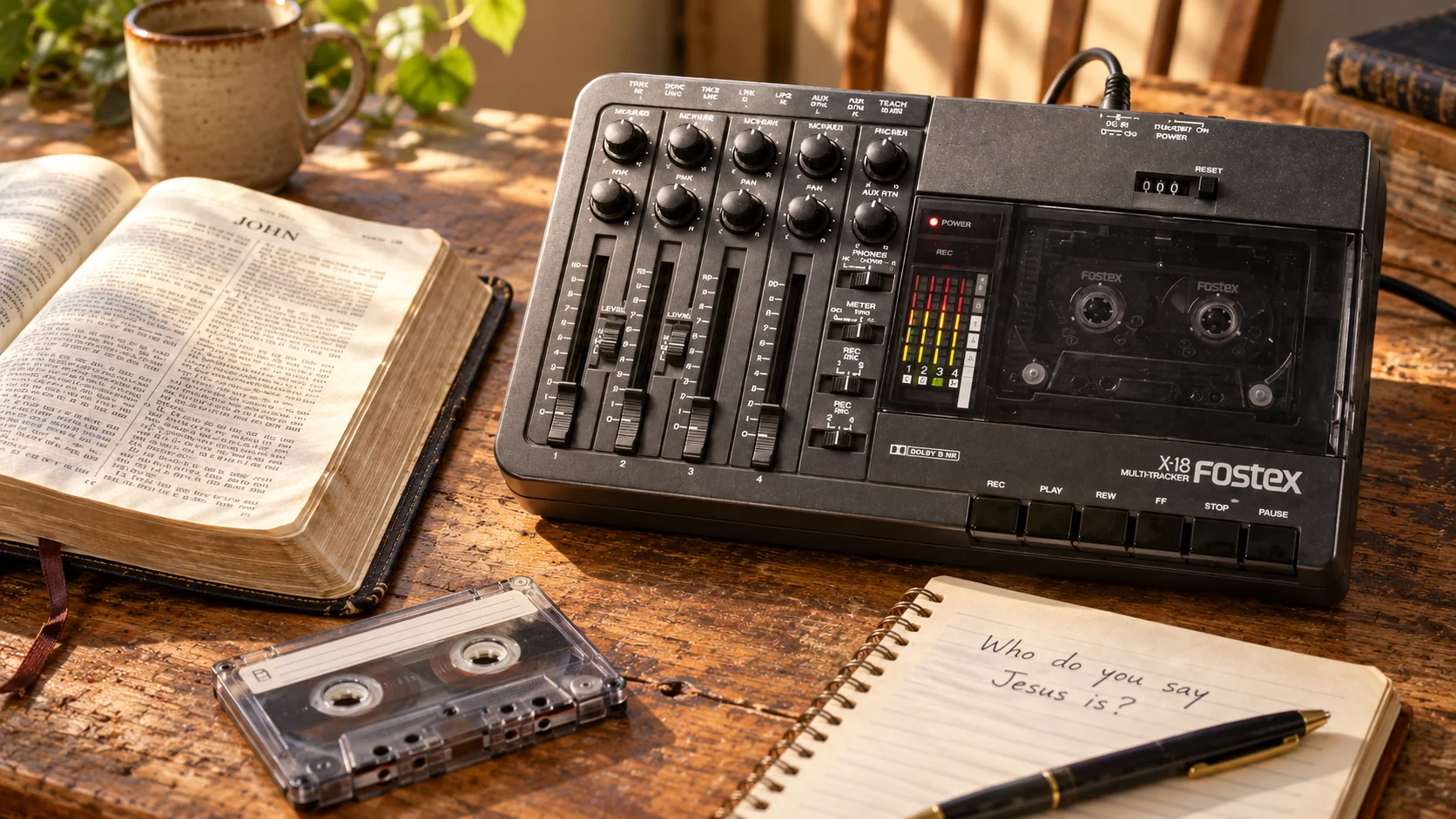
Some of their answers have stayed with me. “Jesus is a combat boot in the sky, ready to give you a kick in the butt if you make a mistake.” “Jesus? You need to worry about God. He is a spiritual two-by-four, ready to clobber you.” “Jesus is my best friend. We do everything together.” “Jesus died for your sins, so you need to respect Him, clean yourself up, and be presentable.”
At first, I thought, I am more behind than I thought. But the more people I interviewed, the more unsettling it became. Beyond agreeing that Jesus was the Son of God and really important, there didn’t seem to be much agreement about what He was actually like. What began as an effort to receive a hand up left me wondering whether we were all talking about the same Jesus.
That question moved me into a kind of spiritual boot camp. I read the Bible every day, often for hours. I wanted to discover who Jesus said He was and who He said I was. Reading through the Gospels, I struggled to connect the dots between the Jesus I encountered there and some of the descriptions on those tapes. I did notice that people misunderstood Him back then, too. That wasn’t a great comfort, but it was a little.
Then something else began to emerge. This was much more of a love story than a military landscape. Jesus was willing to work with people just as they were. He saw them as worthy of His love from the beginning. They didn’t have to clean themselves up before He would come near, and He continued working with them through their weaknesses and failures. That challenged some of what I had already experienced.
My first church experience as an adult included someone approaching me before the service, introducing themselves, and inviting me to lunch afterward. Wow, I thought. This is awesome. After the service, they found me, took me to their car, and drove me to a place called The Toggery. The Toggery didn’t serve food. It sold suits. I was confused. I never did get lunch, but I got a suit jacket, three button-up shirts, two pairs of slacks, some socks, and shoes.
At the time, I assumed this was another thing I was in the dark about. They must know something I didn’t. I thought they were being helpful. As I kept reading the Bible, though, I didn’t see that kind of behavior in the life of Jesus. I couldn’t find where getting someone properly dressed was His first step toward relationship. Slowly, my attention began turning from what His followers told me toward what I could see of Jesus Himself in Scripture.
I still had questions I was reluctant to admit. One kept returning: Am I believing a lie about Him? I skirted around it. I didn’t want people to discover the gaps in my understanding. I didn’t want to reveal my doubts. I certainly didn’t want to admit to Jesus that some of what I believed about Him might be wrong. But I couldn’t escape the question. Eventually, I brought it to Him. “Am I believing a lie about You?”
When I finally asked with a willingness to listen for an answer, the impression I received was something like, Of course you are, silly. It was more a feeling than something I heard. What came with it was comfort. Peace remained. No combat boot. No spiritual two-by-four. There was an invitation to keep learning, to take the knowledge I had gathered and let it move into my heart.
He really loves us. I began to realize I had nothing to hide. And even if I tried, He is the all-knowing God. Who exactly did I think I was fooling? That love gave me security and freedom to learn without guilt and shame governing the process. They still show up as temptations, but I don’t have to handle them on my own. I pass them up the chain.
For me, this is part of what it means for faith to become my own. I possess all kinds of knowledge I don’t believe. I can repeat an idea, explain it, and recognize where it came from without trusting it enough to act on it. Our beliefs govern our actions. Knowing the words is only part of the journey. Scripture points me toward promises. But until I receive a promise as something I can trust and live from, it can remain information on a page.
“Jesus loves me” was becoming something I could live from. His love gave me the freedom to bring Him a question I had been afraid to ask. I could admit what I didn’t understand and trust Him to continue with me.
Years later, I remembered someone who had tried to introduce me to that love long before I carried a tape recorder around a church. Her name is Laurel Marie West, but when I knew her, she was Laurel Marie Lazov. I called her Marie. She was my friend in ninth grade and the first peer I remember sharing Jesus with me. Family members had spoken to me about Him when I was younger, but hearing it from a friend was different. At the time, I laughed at her and made fun of her for it. Years later, I remembered her attempts and realized I had discovered firsthand that she was right. “Jesus loves me, this I know, for the Bible tells me so.”
I’m grateful for the people who introduced me to Jesus. Our beginnings often come through someone else’s words, prayers, encouragement, or example. Those beginnings matter. But there is an invitation to come to know Him for ourselves. Perhaps you know the familiar answers but struggle to describe your own relationship with Jesus. Perhaps you are rebuilding your faith and wondering which parts of what you received you can still trust. You can bring those questions to Him.
Read a Gospel slowly. Pay attention to how Jesus approaches people, especially those who are confused, struggling, or failing. Notice what challenges the picture of Him you have carried. Pray honestly about it. Talk with trusted people who make room for questions and help you return to Him.
Sometimes we have to cross the chicken-line. We may wish the fear would disappear first. But sometimes the next step is to step over that line and see what is on the other side. For me, that meant asking a question I had been hiding. What I found on the other side was unconditional love.
Continue the Conversation
When did something you had heard about God become personal to you?
Join the Conversation on Facebook (opens in a new tab)